Tuesday morning, 7:14, Molly cannot find her lunchbox, Wyatt needs a ride, and I have six minutes to get out the door. This is when chino pants for men earn their place in the closet. They look more pulled together than jeans, feel easier than dress pants, and work with the shirts most of us already own. After three years of tracking purchases and wears in my closet spreadsheet, I have found that the right pair gets used constantly instead of sitting around waiting for a special occasion.
Why chinos belong in a grown-up wardrobe
Chinos are cotton trousers with a cleaner finish than denim. Most have slant front pockets, belt loops, and a fairly simple design, which is exactly why they are useful. You can wear them to a casual office, a school conference, a Saturday dinner, or a backyard gathering without looking like you dressed for a different event.
The appeal of chino pants for men is range. A navy pair with a white Oxford shirt looks capable without being stiff. Khaki chinos with a gray T-shirt are relaxed but still intentional. Olive chinos can replace jeans when you want something different without entering fashion-experiment territory. In my spreadsheet, my most-worn pairs usually land between $35 and $80. A $60 pair worn 40 times costs $1.50 per wear, which is better value than a cheap pair worn twice.
Fit matters more than the label on the waistband. The seat should lie flat, the front should not pull when you sit, and the waistband should stay up without needing a tight belt. Around the ankle, a small break is usually safest: the fabric touches the top of your shoe but does not bunch into several folds.
Choosing the right fit and fabric
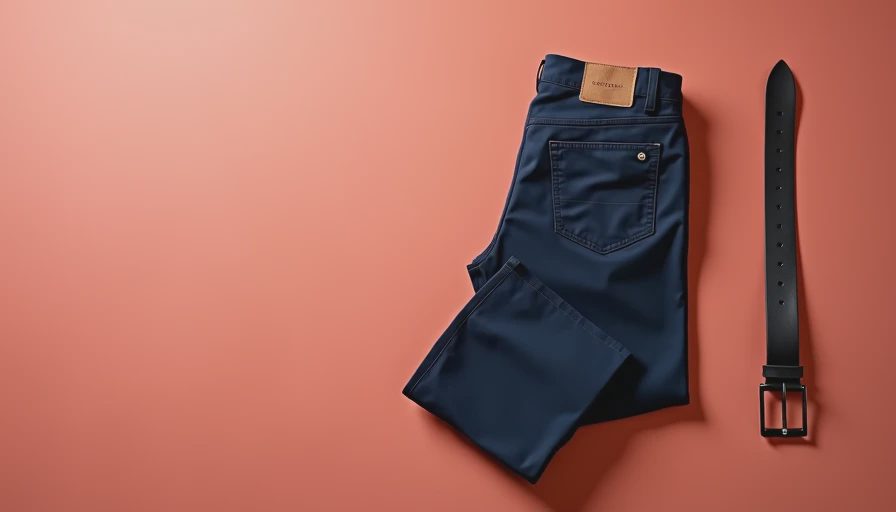
When shopping for chino pants for men, start with the shape of your body and your normal day, not the name of the cut. Straight fit gives your legs room from hip to ankle and is a reliable choice if you dislike restriction. Athletic fit usually adds room through the seat and thigh while narrowing slightly below the knee. Slim fit can look sharp, but it should still let you climb stairs, drive, and sit through a meeting comfortably.
Stretch fabric is helpful in small amounts. One or two percent elastane can make a long commute or a full day at a desk easier. A pair that feels like exercise clothing, however, often looks too soft and casual after a few washes. Look for medium-weight cotton with enough structure to hold a crease at the front. Lightweight fabric is comfortable in July, while heavier twill works better in fall and winter.
Before buying, try sitting, walking, and putting your hands in the pockets. If the pockets flare open, the pants are probably too tight across the hips. If the fabric collapses into horizontal lines under the seat, the rise or size may be wrong. A $15 alteration to the hem can improve a $50 pair more than moving up to a $150 brand.
The colors I actually wear
Khaki is the default for chino pants for men, but it is not the only useful color. Medium khaki works with navy, denim, white, light blue, burgundy, and green. Avoid a shade so pale that it resembles cream unless you already have darker shirts and shoes to balance it.
Navy is my most dependable second pair. It works with a pale blue shirt for the office and a henley for a weekend lunch. Charcoal is another practical option, especially if your workplace sits between business casual and casual. Olive adds variety while remaining easy to combine with brown, gray, navy, and off-white.
I would be cautious with bright colors, heavy fading, or dramatic contrast stitching. Those details can make a pair harder to repeat. The point of a useful closet is not having more choices; it is having choices that cooperate. If you own three pairs, khaki, navy, and olive or charcoal will cover more situations than three versions of khaki.
For shoes, brown leather or suede works naturally with khaki and olive. White leather sneakers make navy and charcoal feel more relaxed. Dark sneakers can work too, provided they are clean and simple. The shoe does not need to be expensive. It needs to make sense with the formality of the trousers.
Four outfit formulas that do the thinking for you
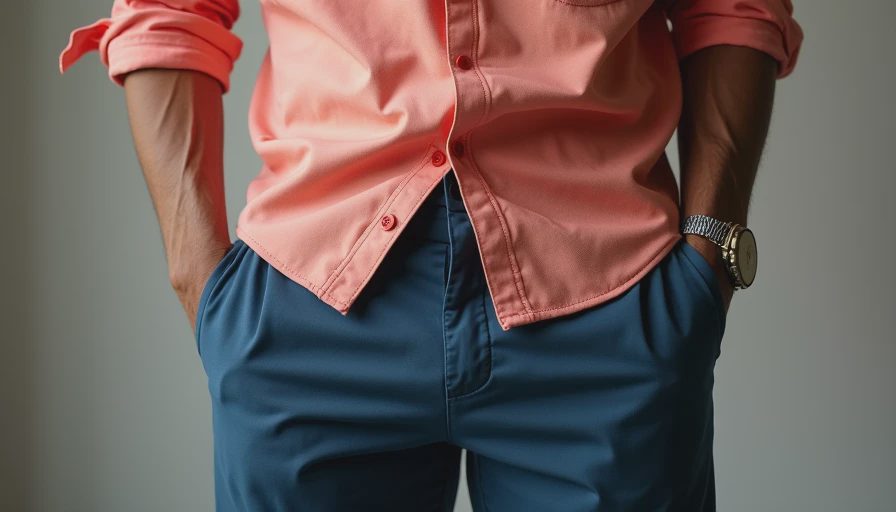
The easiest way to use chino pants for men is to build repeatable combinations. For a regular office day, try navy chinos, a light blue Oxford shirt, brown belt, and brown derby or loafer. Roll the sleeves after work if the setting allows it. This looks finished without suggesting you are headed to a board meeting.
For a casual Friday, pair khaki chinos with a solid polo and clean white sneakers. Choose a polo that ends around the middle of your zipper area rather than one that hangs like a golf shirt borrowed from a taller brother. A simple watch is enough; no extra accessories are required.
For dinner, wear charcoal or olive chinos with a textured overshirt, plain T-shirt, and suede chukka boots. The layers add interest without relying on a loud pattern. In cooler weather, a navy crewneck sweater over a white button-down is nearly impossible to misuse.
For a family weekend, chino pants for men can be as easy as olive trousers, a gray henley, and canvas sneakers. This is comfortable enough for errands and presentable enough if the errands turn into lunch. Tuck in the shirt when the waistband and belt look clean; leave it untucked when the shirt has a flat hem and the length is reasonable.
How to shop without wasting money
I use a short checklist before buying chino pants for men. First, check the fabric in natural light. Very thin cloth can show pocket outlines and wear quickly at the knees. Second, inspect the stitching around the belt loops, pockets, and seat seam. Loose threads are not always a deal breaker, but several weak areas suggest poor durability. Third, move around for five minutes instead of standing in front of the mirror.
Price is useful only when connected to wear. Retailers such as J.Crew, Bonobos, Dockers, Uniqlo, Gap, and Lands' End often offer different fits and price points, but no brand automatically earns a place in your closet. Sales between $30 and $70 can be sensible for a basic pair. Paying over $100 makes more sense when the fabric, construction, fit, and expected wear are clearly better for you.
Buy one pair first and record how often you wear it. If it becomes your default twice a week, buy a second color with the same general fit. That approach prevents the common mistake of buying five pairs before learning that the waistband rolls, the pockets are too shallow, or the fabric wrinkles badly after sitting.
A simple maintenance routine
Good chino pants for men do not need complicated care. Wash them according to the label, turn them inside out when possible, and avoid high dryer heat if the fabric contains stretch. I usually hang mine after washing and give them a quick steam or iron before work. Empty the pockets first; a forgotten pen can turn a useful pair into garage clothes.
Rotate pairs instead of wearing the same one every day. Two or three days of rest gives fabric a chance to recover and reduces the buildup of odor and knee stretching. Spot-clean small spills rather than washing immediately. For barbecue sauce, which is a recurring hazard in my house, I blot first, apply detergent to the mark, and wash promptly rather than rubbing it deeper into the cotton.
Replace a pair when the knees have permanently bagged out, the seat has become shiny, or the pockets no longer lie flat. Minor fading is usually fine and can make chinos look lived-in. Structural failure is different. No outfit formula can rescue trousers that are fighting the shape of your body.
The bottom line for your next purchase
The best chino pants for men are not the trendiest pair or the one with the biggest logo. They are the pair that fits while sitting, matches at least five shirts, works with two kinds of shoes, and survives your actual week. Start with medium khaki or navy, choose a comfortable straight or athletic cut, and look for durable cotton with modest stretch.
Tomorrow morning, pull on the pair that makes the rest of your closet easier. Add a button-down for work, a polo for a casual office, or a plain T-shirt for the weekend. That is the whole idea behind getting dressed on purpose: fewer decisions, better repeat wear, and clothes that keep up with the life you already have.

No notes yet — write the first.