Tuesday morning, 7:14, Molly cannot find her lunchbox, and I am staring at my closet with six minutes before the school drop-off. On days like that, a jacket mens blazer is useful because it solves a real problem: making a basic shirt and jeans look deliberate without making you look like you are headed to a wedding. The trick is finding one that fits your actual life, not a mannequin's life.
I have tested blazers for office meetings, parent conferences, steakhouse dinners, and rushed trips through the Kansas City airport. Some were too stiff, some too shiny, and one made me look like I had borrowed my little brother's jacket. Here is the straightforward system I wish I had used at 38.
Start With Fit, Not the Label
Fit is the first spreadsheet column for a reason. A jacket can cost $90 or $900, but neither price helps if the shoulders hang past your natural shoulder line. The shoulder seam should finish where your shoulder ends. If it drops down your upper arm, the jacket is too large and tailoring will not always fix it cleanly.
Button the jacket while standing normally. You should be able to slide a flat hand between your chest and the fabric, but you should not see pulling around the middle button. The sleeve should show about a quarter-inch of shirt cuff. That small detail makes the whole outfit look planned.
The hem usually works best around the middle of your seat. Too short, and the jacket mens blazer combination can look trendy in a way that gets old quickly. Too long, and your legs appear shorter. Try the jacket with the shoes you normally wear, then lift your arms, sit down, and reach for a steering wheel. Clothing that only works while standing in a fitting room is not a good purchase.
Choose a Color You Will Actually Wear
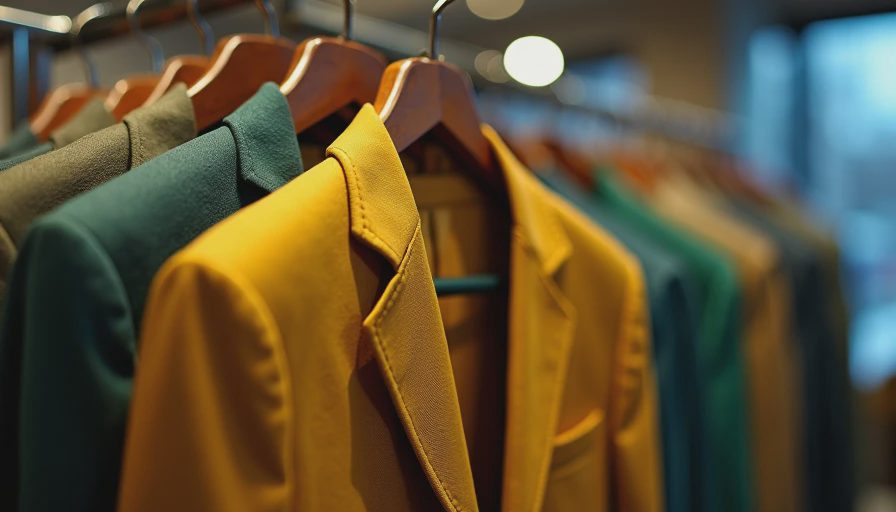
For a first purchase, navy is hard to beat. It works with gray trousers, tan chinos, dark denim, white Oxford shirts, and simple knit polos. Medium gray is another useful option, especially if your closet already leans blue. I would avoid a bright color or bold check until you have worn a plain blazer at least a dozen times.
A jacket mens blazer in navy does not need to match your pants. That is the point of an odd jacket: it is designed to work with separate trousers. The navy jacket and gray pants combination is reliable for an office presentation. Navy with khaki chinos feels less formal and works for dinner, a school event, or a Friday meeting.
Texture also changes the message. Smooth worsted wool looks businesslike. Hopsack wool has a subtle open weave and handles separate trousers well. Cotton or linen feels relaxed but wrinkles more easily. A wool blend around $150 to $350 can be a sensible starting point, while a sale item from a department store may offer better value than paying for a familiar logo.
Build Three Outfits Before You Buy
Before spending money, make three outfits from clothes already in your closet. First, try the jacket with a white or light-blue button-down, gray trousers, and brown leather shoes. Second, use dark jeans, a pale blue Oxford shirt, and clean leather sneakers. Third, try chinos, a knit polo, and loafers or casual lace-up shoes.
If the jacket works in all three combinations, you are buying versatility instead of a costume. If you need new pants, new shoes, and special shirts just to make it usable, add those costs to the purchase. My spreadsheet tracks total outfit cost, not just the price on the hanger. A $180 jacket that supports ten existing outfits beats a $350 jacket that requires a complete new uniform.
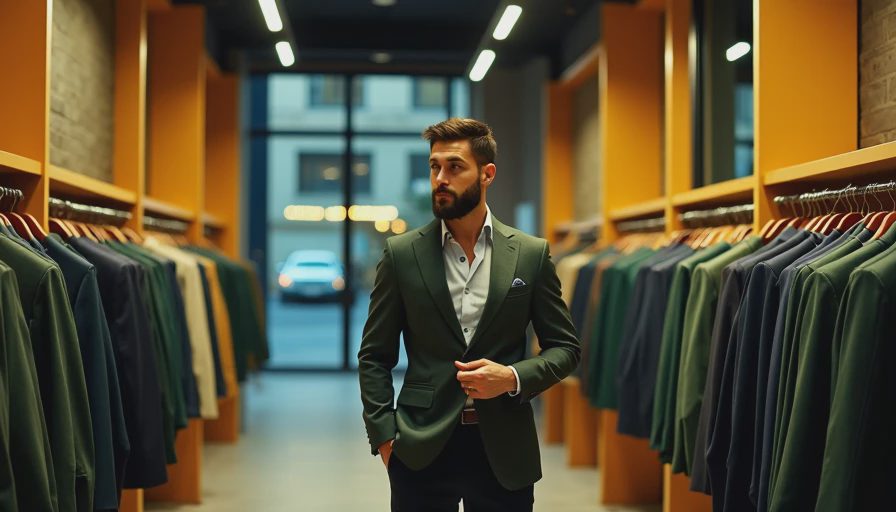
For men in their 30s and 40s, the sweet spot is usually a clean, lightly structured shape. That means enough shoulder support to hold its form, but not so much padding that you look like you are campaigning for office. A jacket mens blazer should follow your body without squeezing it. Leave room for a normal shirt, and do not size up simply to hide the stomach; a tailor can often adjust the waist more effectively.
Understand Construction Without Becoming a Clothing Expert
You do not need to memorize tailoring vocabulary. Just know three practical terms. A fused jacket uses adhesive to connect layers and is often less expensive. A half-canvassed jacket has more flexible internal construction across the chest. A full-canvassed jacket generally costs more and can drape beautifully, but it is not automatically the best value for a man who wears a blazer six times a year.
Look at the inside seams and buttonholes. Loose threads are not a good sign. The buttons should be attached securely, and the lining should allow comfortable movement. Unlined or partially lined jackets can feel cooler in summer, while a full lining may slide more easily over a dress shirt. For a Midwest closet, I like a medium-weight option that works from early fall through spring, then a cotton or linen blend for hot months.
Also check the vents. A single vent is common and perfectly workable. Double vents often sit more neatly when you put your hands in your pockets or sit down. Neither choice makes you a better-dressed person. It is simply a matter of how the jacket behaves on your body.
When to Tailor and What It Costs
Small alterations can turn an ordinary purchase into the jacket mens blazer you reach for every week. Sleeve shortening often runs roughly $20 to $45. Taking in the sides may cost about $30 to $70, depending on the construction and local tailor. Trouser adjustments are usually separate, so ask for a full estimate before approving work.
Prioritize the shoulders, then the chest, then the sleeves. A tailor can shorten sleeves and refine the waist, but changing the shoulders is expensive and sometimes impossible without rebuilding the garment. Bring the shirt and shoes you expect to wear. Tell the tailor whether you want a conservative sleeve length or a little cuff showing; both can work, but the choice should be intentional.
Do not remove the tags until you have checked the fit in natural light. Department-store fitting-room mirrors can be flattering, and online photos rarely show how a jacket sits when you move. If ordering online, measure a jacket you already own that fits well and compare those measurements with the seller's chart.
A Simple Buying Plan That Works
Start by setting a realistic budget. Around $150 to $250 can buy a useful first blazer during a sale. At $300 to $600, you will find more fabric and construction choices, but you still need to inspect fit. Spending more makes sense only when the jacket fills a regular role in your calendar. Cost per wear matters: a $220 jacket worn 40 times costs $5.50 per wear before alterations.
Buy navy or medium gray first, then give yourself 30 days to wear it in different settings. Notice what fails. Maybe the sleeve is too long, the fabric wrinkles in the car, or the color clashes with your only pair of work shoes. Record that information instead of buying another version of the same mistake.
The best jacket mens blazer is not the one that earns compliments from a fashion forum. It is the one you can grab on a busy morning, combine with clothes you already own, and wear comfortably through a full day. Start with fit, choose a quiet color, tailor the small problems, and keep the outfit simple. That is how you get dressed on purpose.


No notes yet — write the first.