Tuesday morning, 7:14, Molly cannot find her lunchbox, Wyatt needs a permission slip, and I am looking at my closet with six minutes before I leave. This is where a sports jacket earns its keep. It can make jeans and a button-down look intentional, turn basic chinos into a client-ready outfit, and give you something more useful than a suit coat when the day has two different dress codes.
I am not talking about buying a shiny, skinny-cut jacket that looks like it belongs on a nightclub promoter. A good sports jacket is a practical layer with some structure, but enough ease for real life. Mine has handled office meetings, school concerts, restaurant dinners, and one unfortunate barbecue smoke session. Here is what I have learned from wearing, logging, and occasionally regretting these purchases.
What a sports jacket actually does
The easiest way to understand a sports jacket is to compare it with a suit jacket. A suit jacket is designed to match trousers made from the same fabric. A sports jacket stands alone. It usually has a more visible texture, a less formal pattern, or details such as patch pockets. You can wear it with jeans, chinos, wool trousers, or five-pocket pants without looking like you lost the bottom half of a suit.
That flexibility makes a sports jacket valuable for men in their thirties, forties, and fifties. You do not need a different outfit for every kind of dinner. One navy jacket, a pale blue Oxford shirt, gray trousers, and brown loafers can cover a work presentation and an anniversary meal. Change the trousers and shoes, and the same jacket moves down a notch for Friday office wear.
The important distinction is structure. A completely soft cardigan-like layer can be comfortable, but it will not sharpen your outline much. A heavily padded jacket can make you look like you are heading to a board meeting in 1998. The useful middle ground has a clean shoulder, a natural chest, and enough room to button without pulling.
Start with fit, not the label
Fit is where most of the improvement happens. I would rather own a $180 jacket that fits properly than a $700 jacket that makes my shoulders look borrowed. When you try on a sports jacket, button the top button and stand naturally. The fabric should lie flat across your chest. If you see a sharp X-shaped pull, the jacket is too small. If the lapels collapse and the chest hangs away from your body, it is too large.
The shoulder seam should finish close to the edge of your shoulder, not halfway down your upper arm. The sleeves should show roughly a quarter to half an inch of shirt cuff when your arms hang normally. The jacket hem should cover your seat and end somewhere around the middle of your hand when your arms are relaxed. Those are starting points, not laws, but they prevent the two most common problems: looking swallowed by fabric or squeezed into it.
Pay attention to length if you carry extra weight around the middle. A shorter jacket is not automatically more flattering. It can make your torso look wider and your legs look unusually long. A properly proportioned sports jacket creates a clean vertical line, which is a plain-English way of saying your clothes look like they belong to the same person.
The first color and fabric to buy
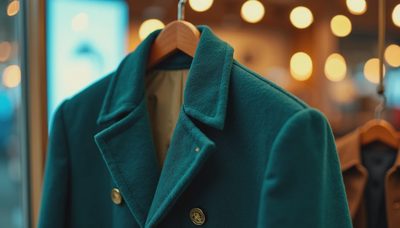
For a first purchase, I would choose navy with a modest texture. A navy sports jacket works with medium-gray trousers, khaki chinos, dark denim, olive pants, and even lighter gray jeans. Avoid a bright blue finish if versatility is the goal. It can look good under store lighting and strangely loud in an office or a dim restaurant.
Fabric matters more than many men expect. A wool blend with visible texture can work across much of the year, while cotton or linen is easier for warm weather but tends to wrinkle. For Kansas City, my practical rotation is a textured wool jacket for fall through spring and an unlined cotton-linen option for hot summer evenings. You do not need both on day one. Buy the piece that matches the places you actually go.
Patterns deserve restraint. A subtle windowpane or herringbone can add interest, but a loud check limits your combinations. If your shirts already have stripes, checks, and gingham, a solid jacket will probably get more wear. My closet spreadsheet confirms the boring answer: the plain navy jacket has been worn far more often than the clever pattern I was excited about in the fitting room.
Three outfits that work in real life
The most dependable sports jacket outfit starts with dark denim, a white or light blue shirt, and brown leather shoes. This is not formal, but it is a significant step above a polo and sneakers. Choose jeans with a clean, straight or gently tapered leg and no fading across the thighs. The jacket should be the only tailored item, so the outfit does not feel overbuilt.
For a business-casual office, pair the sports jacket with gray wool trousers, a knit tie, and derbies or loafers. A pale blue shirt keeps the combination approachable. If your workplace is more relaxed, skip the tie and use a fine-gauge sweater over the shirt. A sports jacket handles that change without requiring a full wardrobe reset.
For a weekend version, try dark olive chinos, a chambray shirt, and clean leather sneakers. Roll nothing, distress nothing, and leave the jacket unbuttoned while standing. The goal is not to look dressed up for its own sake. It is to look like you made a decision before walking out the door.
Common mistakes that cost money
The first mistake is buying a jacket that is too formal for the clothes you own. A sleek black jacket with shiny buttons often reads like part of a suit, which makes jeans look accidental. The second is pairing too many office signals together: crisp white shirt, silk tie, polished black shoes, and a formal jacket can become a suit without matching trousers.
Another mistake is ignoring the shoulders because the sale price looks attractive. Tailors can shorten sleeves and adjust the waist, but changing the shoulders is expensive and sometimes impossible. I budget $30 to $80 for basic alterations, depending on the work. That cost is worthwhile when the jacket is sound, but it should be included in your original price calculation.
Finally, do not buy a jacket for an imaginary lifestyle. If you work from home and attend two formal dinners a year, a versatile navy layer makes more sense than four statement jackets. Cost per wear is the honest test. A $250 sports jacket worn twenty-five times costs $10 per wear. A $90 jacket worn once costs more than it appears.
A simple buying plan
Start by checking your closet. Lay out your most-worn shirts, trousers, jeans, and shoes. If most of your pants are blue denim and khaki, navy is an easy partner. If you already own navy trousers, gray or brown may give you more separation. Take photos in daylight so you can see the actual colors instead of relying on yellow fitting-room lights.
Then set a realistic budget. Department-store sales, outlet sections, and secondhand shops can produce useful options between $100 and $300. At higher prices, look for better construction and fabric, not a logo. Try the jacket with the shoes you normally wear. Walk, sit, reach for your car keys, and button it while standing. A piece that feels good for thirty seconds can become irritating during a ten-hour day.
Give yourself one week before buying a second jacket. Wear the first one at least three different ways and record what worked. That small experiment tells you more than a dozen online style videos. When the jacket earns regular wear, add another color or a warmer fabric. The result is a closet that supports your life instead of requiring a costume change.
A sports jacket does not need to announce itself. It simply gives your existing clothes a little more shape and intention. Start with reliable fit, a flexible color, and outfits you can repeat without fuss. Tomorrow morning, pull on the version that works with your actual schedule. That is what being dressed on purpose looks like.

No notes yet — write the first.