Tuesday morning, 7:14, Molly cannot find her lunchbox, Wyatt needs a permission slip signed, and I am staring at my closet with six minutes to spare. That is when work pants for men earn their keep. I need trousers that look presentable on a client call, survive a trip to the hardware store, and do not make me feel like I borrowed my teenage nephew's clothes.
After three years of tracking what I buy and how often I wear it, I have learned that the best pair is rarely the most advertised. It is the pair that fits properly, handles your actual routine, and works with at least three shirts already hanging in your closet. Here is the system I use before spending my money.
Start with the job your pants have to do
Work pants for men cover several different situations, and one pair does not need to handle all of them. A warehouse worker may need abrasion resistance, stretch, and a secure phone pocket. Someone in an office may want a cleaner cotton trouser that looks comfortable beside an oxford shirt. A homeowner working in the garage needs room to bend without fabric pulling across the seat.
Think through your average week. If you drive to an office, sit for long meetings, and occasionally walk a job site, a five-pocket pant in cotton twill or a trouser with modest stretch is a useful middle ground. If you climb ladders or kneel often, look for a gusseted crotch, reinforced panels, or fabric advertised for work rather than casual wear.
The word “work” should describe your day, not force you into a uniform. My commercial claims job involves plenty of desk time, but I still inspect damaged buildings. A lightweight, straight-leg pant handles that mix better than either delicate dress trousers or heavy utility pants.
Get the fit right before judging the fabric
Most complaints about work pants for men are really fit complaints. A good pair should sit securely at your natural waist without needing a belt cinched so tightly that the waistband folds. You should be able to slide two fingers inside the waistband, sit down without pressure, and walk upstairs without tugging at the fabric.
The seat should follow your shape without outlining every detail. Too tight creates stress at the pockets and zipper. Too loose makes the back look droopy and often causes the waistband to slide when you carry a phone or wallet. Straight-leg pants are a reliable starting point for most men because they balance work boots, sneakers, and casual leather shoes.
Pay attention to the hem. With boots, a slight break over the shoe looks intentional. With sneakers, excess fabric can bunch around the ankle and make the whole outfit look sloppy. You do not need a fashionable crop or a dramatic taper. You need a hem that rests neatly on your footwear.
Choose fabric based on comfort and abuse
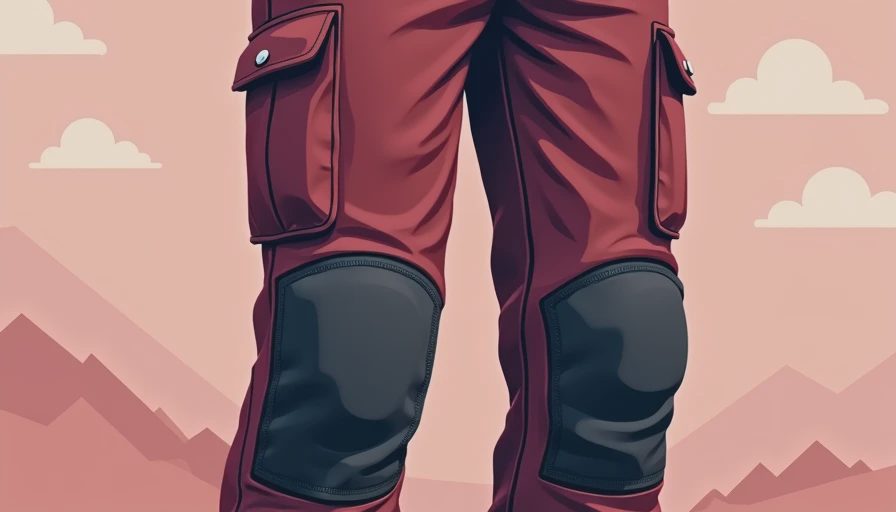
Cotton twill is the dependable default for work pants for men. It feels familiar, breathes reasonably well, and comes in enough weights for office days or outdoor chores. A small amount of elastane, often around 1 to 3 percent, can make sitting, squatting, and driving more comfortable without turning the pants into stretchy gym clothing.
Canvas is tougher and usually stiffer. It makes sense for carpentry, landscaping, or garage work, but it can feel heavy at a desk. Duck canvas is especially rugged, though it often needs several wears before it softens. Ripstop fabric uses a reinforcing weave designed to limit tearing, making it practical when you work around sharp edges or rough surfaces.
For hot Midwestern summers, lighter fabrics matter. A pair that weighs a half-pound less can feel noticeably better during a July inspection. For winter, heavier cotton or a lined option can help, but remember that bulky pants take up more room under a coat and may feel restrictive in a truck or office chair.
Pockets, stitching, and details worth checking
A pocket is useful only if it holds something without ruining the fit. Before buying work pants for men, put your phone in the front pocket and sit down. If the device digs into your thigh, the pocket is too shallow or placed poorly. If you carry a folding knife, tape measure, or small flashlight, test those items too rather than trusting a product description.
Look at the stress points: belt loops, pocket corners, the seat seam, and the area around the zipper. Bar tacks, which are short rows of dense reinforcement stitching, can add strength where fabric gets pulled. Double-stitched seams are helpful, but neat single stitching is not automatically weak. Loose threads, uneven seams, and thin pocket bags are better warning signs.
I also check whether the pockets are deep enough for my keys. That sounds minor until you are walking across a parking lot and hear metal hit the pavement. Details like a button closure on a back pocket or a phone pocket inside the right front pocket can make a pair easier to live with every day.
Brands and price without the brand worship
Work pants for men can cost roughly $25 to $120, with the useful middle often landing between $45 and $80. Carhartt, Dickies, Wrangler, Duluth Trading, and Levi's all offer different fits and fabric weights, so the logo tells you less than the actual measurements and construction. A $35 pair that fits well and survives two years can be a better purchase than an $85 pair you avoid wearing.
Start by checking the retailer's size chart, then compare the rise, thigh, leg opening, and inseam with a pair you already like. “Relaxed” at one company can resemble “regular” at another. If possible, order two nearby sizes and test them while sitting, bending, and walking. Return the one that needs constant adjustment.
My spreadsheet tracks cost per wear, not just purchase price. A $70 pair worn twice a week for two years is a better value than a $30 pair worn five times because it pinches, fades badly, or cannot handle the wash routine.

Build simple outfits around dependable colors
The easiest work pants for men to use are usually charcoal, navy, olive, khaki, or medium brown. These colors pair with blue oxford shirts, white tees, flannel overshirts, quarter-zips, and simple sweaters. Black can work, but it often looks more uniform-like and shows lint clearly.
For my closet, one charcoal pair and one dark olive pair cover most casual office days. Add khaki for warmer weather and dark denim for Fridays or weekend errands. You do not need six nearly identical shades. Three pairs that rotate cleanly are easier to maintain than a crowded drawer full of options.
Keep the rest of the outfit uncomplicated. A tucked oxford shirt and brown belt can make a utility-style pant look office-ready. A henley and clean sneakers can take the same pair toward the weekend. Matching the level of formality matters more than chasing a special “workwear” look.
A five-minute buying checklist
Before purchasing work pants for men, read the fabric composition and decide whether the weight matches your climate. Check the rise and inseam instead of ordering your usual size automatically. Test the waistband while seated, then bend down and climb a stair if you are in a store. Load the pockets with your everyday items. Inspect the stitching at the belt loops and pocket corners.
At home, try the pants with two shirts and two pairs of shoes. Wear them for an hour before removing the tags. Notice whether the waistband rolls, whether the knees pull, and whether the fabric catches on your chair. Those small annoyances become daily annoyances quickly.
The goal is not to look like a catalog model. It is to get dressed at 7:14 on a busy Tuesday and know the outfit will do its job. Choose work pants for men with a comfortable fit, sensible fabric, useful pockets, and colors that cooperate with your closet. That is enough to look like you dressed on purpose.

No notes yet — write the first.