
The Conversation I’ll Never Forget
It was a Tuesday afternoon in early 2023. I’d just finished a client meeting and my boss, Mark, asked me to step into his office. I figured it was about the claim file we’d discussed earlier.
Instead he said, “Brett, you’re doing great work. But you need to start looking the part.”
It wasn’t mean. It wasn’t even particularly harsh. But it hit me right in the gut. I was 39 years old, a senior adjuster, married with two kids, and apparently my clothes were telling a different story than my performance.
I drove home that evening replaying the conversation on loop. Part of me was defensive. Part of me was embarrassed. A bigger part of me knew he was right.
What “Looking the Part” Actually Meant
I wasn’t showing up in t-shirts and jeans. But my outfits were inconsistent. Sometimes slightly wrinkled. Sometimes the fit was off. Colors that didn’t quite work together. The overall impression wasn’t “solid professional” — it was “guy who’s capable but not quite there yet.”
At 39, that wasn’t good enough anymore.
That night I opened a new Google Sheet. I started logging what I owned and what I actually wore. The spreadsheet that would eventually change everything was born from that uncomfortable conversation.
The First Steps I Took (The Messy Ones)
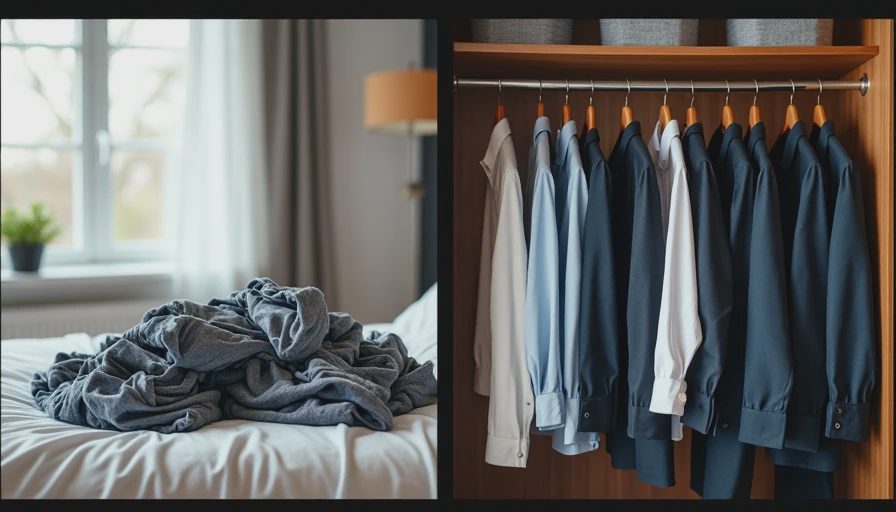
I didn’t have a grand plan. I just started paying attention.
I did my first major closet purge that weekend
I bought a few better basics — dark chinos, solid oxfords
I took everything that made the keep pile to a tailor for proper adjustments
I started tracking every single wear
The early results were humbling. Many of my “good” shirts barely got worn. Some of my favorite pieces looked worse than I realized when I paid real attention.
What Actually Made the Difference
It wasn’t buying expensive clothes. It was building simple systems:
The Core Uniform
Three versatile pants + reliable shirts that all mix easily. No more standing in front of the closet wondering what goes with what.
The Maintenance Habit
Steaming shirts the night before, shining shoes, quick spot cleaning. Small daily habits that compound.
The Data Approach
Using the spreadsheet to let reality guide my decisions instead of impulse or ego.
The Mindset Shift
Dressing better wasn’t about vanity. It was about respect — for my clients, my colleagues, my family, and myself.
The Results Over Time
Within six months, people noticed. Not in a dramatic “makeover” way, but in subtle positive ways. More confident client interactions. Compliments from coworkers. Even Jenna said I seemed more put-together.
The biggest change was internal. I felt more prepared. More like the professional I wanted to be.
My boss never mentioned it again. He didn’t need to.
What I Wish I’d Known Sooner
That conversation was a gift, even though it didn’t feel like one at the time. It forced me to take ownership of something I’d been neglecting.
If you ever get similar feedback — or even if you don’t — here’s what I’d tell you:
Start with fit and maintenance before worrying about style
Build a small, versatile system instead of collecting random pieces
Use data (even simple tracking) to guide decisions
Focus on consistency over perfection
Remember that how you present yourself is part of your professional toolkit
The Neighborly Truth
I’m still the same guy who smokes brisket on weekends, builds things in the garage, and coaches little league when I can. I didn’t become a different person. I just started showing up as a more intentional version of myself.
Dressing better didn’t change who I am. It just stopped undermining the credibility I’d worked hard to earn.
That day my boss told me to “look the part” was uncomfortable. But it was also the beginning of a much better chapter.
If you’re in a similar spot — whether anyone has said it out loud or not — I hope this encourages you to make some changes. Not for fashion. Not for approval. But because you’ve earned the right to show up looking like the capable man you already are.



No notes yet — write the first.