Tuesday at 7:14 a.m., Molly is looking for her lunchbox, Wyatt is asking where his gym shoes are, and I am standing in front of my closet with six minutes to spare. That is usually when business attire gets sorted in the real world, not in some clean, magazine-perfect way. The good news is you do not need a giant wardrobe or a closet full of expensive suits. You need a short list of pieces that fit, survive a long workday, and do not look like you borrowed them from a cousin who is smaller than you are.
Start with fit, not the label
Good business attire starts with fit because fit does the heavy lifting. A shirt that pulls at the buttons or bunches at the waist looks wrong even if it cost a lot. A jacket with shoulder seams hanging off your arm makes you look like you grabbed the wrong size at the last minute. Pants should sit cleanly at the waist and fall straight enough that you are not fussing with them every time you stand up.
I use a simple test: can I sit through a meeting, reach for a file, and raise my arms without the outfit fighting me? If not, it goes back on the rack or to the tailor. A $20 hem is usually a better buy than another $80 shirt you will never enjoy wearing. That is one of the easiest lessons I learned the hard way.
For most guys, the safest place to start is a medium-blue dress shirt, charcoal or navy pants, and a jacket you can wear with both. That combination makes business attire look intentional without making you feel overdressed for a normal Tuesday.
Build a small rotation that actually works
A small rotation beats a closet full of random stuff. If you wear the same office clothes on repeat, you start to notice which pieces pull their weight and which ones just take up space. My own spreadsheet taught me that three shirts worn ten times each is better than ten shirts worn twice each, because the better shirts get chosen again and again.
If you are rebuilding business attire from scratch, think in sets. Two pairs of pants in dark gray and navy. Three or four shirts in white, light blue, and one pattern that is quiet enough to wear with a tie or without one. One blazer or sport coat in navy if your office leans conservative. From there, you can add a second jacket, a knit tie, or another shirt only after you know what you actually wear.
This is also where cost per wear matters. A $120 shirt worn 30 times is cheaper in the long run than a $45 shirt that shrinks, wrinkles, or looks tired after five washes. The goal is not to spend a lot. The goal is to stop buying the same mistake twice.
Shoes and belts do more work than most guys think
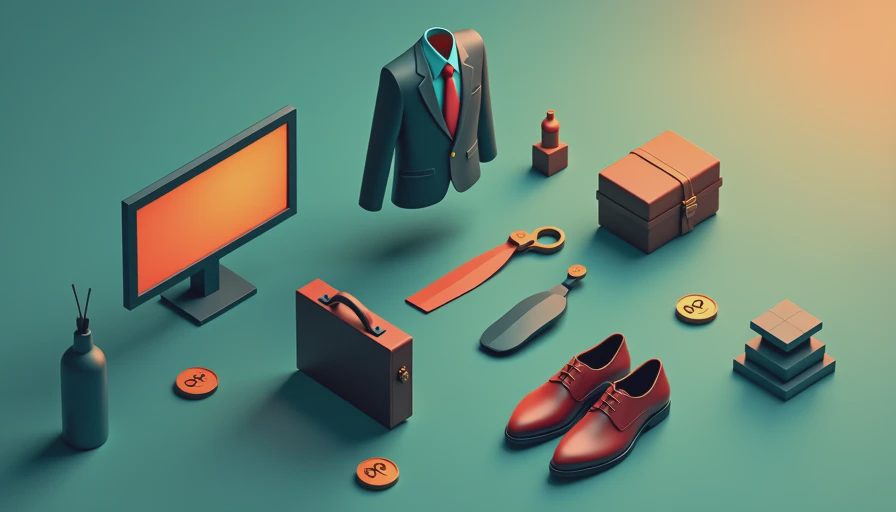
Shoes can make business attire look finished or sloppy in one step. I have seen a clean shirt and nice pants lose the whole argument because the shoes were scuffed to pieces. If your office is traditional, a plain leather oxford or derby in black or dark brown is still the safest move. If your office is a little more relaxed, a clean loafer can work too.
Here is the part I wish somebody had told me earlier: match the formality of the shoe to the rest of the outfit. Chunky casual sneakers with dress pants usually look accidental. Cheap shiny shoes usually look cheap. Midrange leather with a normal finish tends to age better and looks more believable in a real office.
Belts should stay simple. Brown with brown, black with black, and nothing flashy unless the rest of your outfit is already simple. If your business attire is doing its job, the belt should disappear instead of asking for attention. That is true for watches, too. A watch that is too big or too sporty can throw off the whole outfit faster than people think.
What to wear on the days that are not full suit days
Most offices are not full suit offices anymore. That is where business attire gets tricky, because you still want to look sharp without looking like you are headed to a funeral or a wedding. For a normal office day, I lean on dark trousers, a button-down shirt, and either a blazer or no jacket at all depending on the weather and the meeting load.
If you have a client lunch, a presentation, or a meeting where first impressions matter, add the jacket. If you are at your desk most of the day and only see coworkers, the shirt and pants may be enough. The trick is not to drift into gym clothes just because the dress code is looser. A clean shirt with structure still looks better than a wrinkled polo that has been on the floor of your car for a week.
This is where business attire earns its keep: it gives you a repeatable uniform. You are not reinventing yourself every morning. You are choosing from a few combinations that already work, which is a lot easier when someone in your house needs help finding a water bottle before school.

The money mistakes I would skip
The biggest money mistake is buying around the edges instead of solving the real problem. Guys often spend on a nicer tie, a third blazer, or another pair of socks when what they actually need is pants that fit and shoes that are not falling apart. I have done that. It feels productive. It is not.
The second mistake is ignoring alterations. Hemming pants, shortening sleeves, and taking in the waist are boring fixes, but they make a bigger difference than most upgrades. If you spend $60 to tailor a $150 jacket, you may end up with something that looks better than a $400 jacket off the rack.
The third mistake is chasing trend pieces that do not belong in an office. Wide lapels, loud patterns, and ultra-trendy cuts age fast. If you want business attire that still works in three years, keep the colors steady and the shapes simple. That does not mean dull. It means reliable.
A quick Monday-morning test
Before you leave the house, do one last pass in the mirror and ask three questions. Does the shirt lie flat, or is it pulling? Do the pants look like they belong with the shoes, or do they fight them? Would you feel fine walking into a client meeting in this outfit right now? If the answer is no, change one thing, not everything.
That is the whole system I use. Buy less, fit better, keep the colors calm, and let the shoes pull their weight. Business attire does not need to be fancy to work. It just needs to look like you meant to wear it.
If you want to make tomorrow easier, pick one shirt, one pair of pants, and one pair of shoes tonight. Build from there, slowly. That is how a closet gets useful, and that is how a guy ends up dressed on purpose.

No notes yet — write the first.