Tuesday morning, 7:14, and I am standing in my closet while Molly is asking where her lunchbox went. That is usually when business casual men get themselves in trouble, because the outfit gets chosen fast and the result looks like it. The fix is not a closet full of fashion tricks. It is a small system that makes you look like you meant to leave the house. If you have ever put on a shirt, looked in the mirror, and thought, this is close but not quite it, you are in the right place.
What business casual men really need
If your office never wrote the dress code down, start with this: one shirt with a collar, one good pant, one pair of shoes that can handle a meeting. That is the whole game for most people. A light blue Oxford, a white button-down, or a knit polo covers a lot of ground. Chinos in khaki, navy, charcoal, or olive do the heavy lifting. And for shoes, plain leather loafers or derbies usually look more put-together than anything with thick foam or bright logos. The point is not to look like a banker from 1998. The point is to look like a grown-up who respects the room.
Fit does more work than price. A $40 shirt that sits on your shoulders correctly and leaves room in the body will look better than a pricey shirt that pulls across the chest or balloons at the waist. Same with pants. You want enough room to sit down, but not so much that the fabric gathers around your shoes like a curtain. If you are shopping on a budget, this is where I would start: one shirt in each of the three safe colors, two pairs of chinos, and one shoe you can wear three days a week. That gets business casual men out of the panic-buy cycle and into something repeatable.
Start with one outfit you can repeat
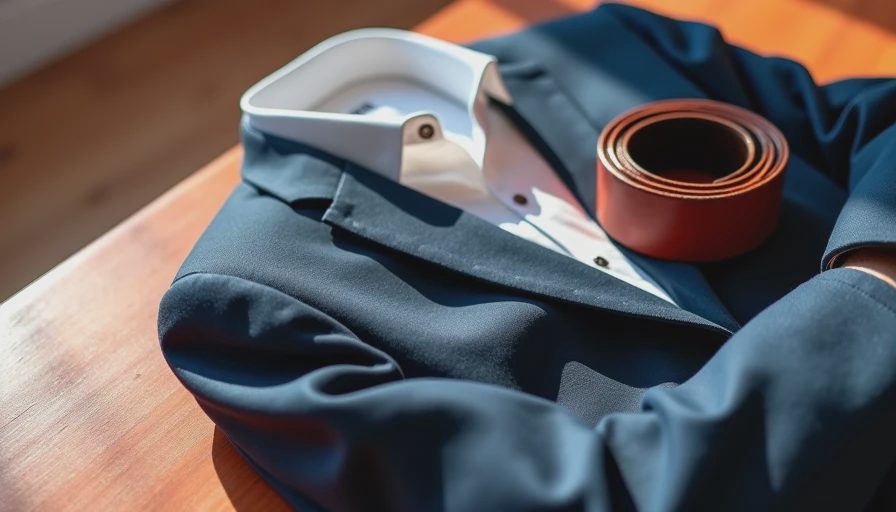
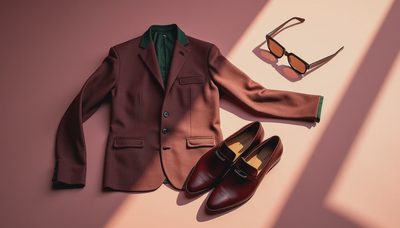
The easiest outfit I know is a navy blazer, light blue shirt, medium-gray chinos, brown leather shoes, and a matching belt. It works for client meetings, lunch with a boss, and the kind of afternoon where you have to stand up in front of people and not look like you guessed. For business casual men, a repeatable outfit beats a closet full of maybes. Once you have one good combination, you can start swapping pieces around without thinking too hard. The blazer can go over dark jeans on a relaxed Friday. The shirt can pair with khakis on a day when the jacket stays on the hanger.
If your office leans casual, swap the blazer for a merino sweater or a textured knit polo. That keeps the outfit calm without making it stiff. Another solid combo is dark jeans with no distressing, an Oxford cloth button-down, and loafers. That version reads relaxed without looking sloppy, which is useful when the day runs from a desk to school pickup to dinner with friends. Keep the lines clean and the colors quiet, and the outfit does most of the work for you.
The mistakes that make a decent outfit look off
The usual trouble starts at the shoulders, sleeves, and hems. Pants that stack up on top of your shoes, shirt cuffs that swallow your hands, and jackets that hang like you borrowed them from a cousin all make a good shirt look cheap. You do not need custom tailoring, but a $15 hem or a $20 sleeve adjustment can change the whole picture. I have spent more than that on lunch and gotten less improvement. Shoes matter too. If they look like they belong on a treadmill, they probably should stay there.
Color can help or hurt in a hurry. Navy, gray, tan, white, and light blue do most of the work. Once those are covered, add one or two deeper colors like olive or burgundy if you want some range. I would skip loud patterns, shiny fabrics, and anything that needs a long explanation before you wear it. If a shirt only looks right under perfect store lighting, it is not pulling its weight. I like clothes that still make sense under fluorescent office lights, in daylight, and at the grocery store after work.

How to spend less without looking cheap
For business casual men, the best budget move is to spend on the pieces that get worn the most and keep the rest simple. Two pair of chinos, three shirts, one jacket, and two pairs of shoes will usually beat a closet full of half-finished ideas. I have had good luck finding shirts from Uniqlo or J.Crew Factory in the $30 to $60 range. Chinos from Dockers, Banana Republic Factory, or similar stores often land between $40 and $80 on sale. Leather shoes from Johnston & Murphy, Clarks, or Cole Haan can often be found in the $90 to $180 range. You do not need the flashiest version of any of it. You need the version that stays in rotation.
A simple cost-per-wear mindset helps here. If a $70 pair of chinos gets worn twice a week for two years, it is doing real work. If a $180 sport coat only leaves the hanger for weddings, that is a different conversation. I track this stuff in a spreadsheet because I am that guy, but you do not need a spreadsheet to see the pattern. The pieces that are easiest to mix and match earn their keep faster, and that keeps you from buying clothes that look good on a hanger and nowhere else.
A quick test before you walk out the door
Before you leave, stand in front of a full-length mirror and ask three plain questions: does the shirt fit cleanly at the shoulders, do the pants break once instead of puddling, and do the shoes look finished? If you answer yes to all three, you are probably fine. Sit down too. A lot of outfits look decent standing up and terrible when you bend, reach, or spend an hour at a conference table. That is where comfort matters more than theory.
I also like the one-hour test. If you can wear the outfit to the office, then straight to dinner without wishing you had changed, you are close to the right formula. That is the whole point for business casual men: not trend chasing, not overthinking, just showing up looking like you paid attention for ten minutes instead of getting dressed in a rush by the garage door. Start with one reliable outfit, wear it a few times, then fix the weak link next. That is dressed on purpose.
No notes yet — write the first.