Tuesday morning, 7:14, Molly cannot find her lunchbox, I have six minutes before school drop-off, and I am staring at a closet full of clothes with nothing that works together. That is when young mens fashion advice becomes useful: not as a list of trends, but as a way to get dressed without thinking too hard. I have spent three years testing clothes, tracking purchases, and recording cost per wear. The goal is simple: look like you made an effort without looking like you tried to become somebody else.
Start with fit before anything else
The most important part of young mens fashion is fit. A $35 shirt that sits correctly on your shoulders will usually look better than a $150 shirt that pulls across your chest or hangs past your seat. You do not need a tailor for every purchase, but you do need to notice a few things.
The shoulder seam should land close to the edge of your shoulder. Sleeves should reach the hinge of your wrist when your arms hang naturally. A T-shirt should skim your body instead of clinging to your stomach or dropping like a tent. Pants should sit comfortably at your natural waist, with enough room to bend down and pick up a child’s backpack.
When I started my closet log, I kept buying medium shirts because medium sounded like the size I ought to wear. In reality, some brands fit me in large, while others needed a regular medium with a roomier cut. The label is not the point. The mirror is the point. Try two sizes, take a quick phone photo, and compare the shoulder line and shirt length instead of trusting the tag.
Build a useful color system
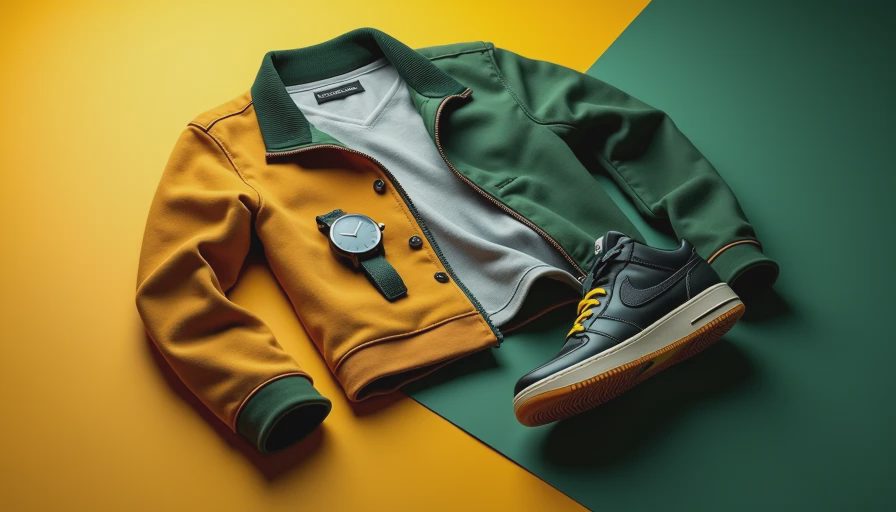
Good young mens fashion does not require a closet full of color. It requires colors that cooperate. I built most of my wardrobe around navy, gray, olive, white, light blue, tan, and dark denim. Those colors cover an office, a school event, a Saturday bike ride, and dinner without forcing me to invent a new outfit every morning.
Think of clothes as a small set of parts. A navy overshirt can work over a white T-shirt, with gray chinos, or with dark jeans. Olive chinos can work with a light blue button-down or a charcoal sweatshirt. Brown leather shoes can connect with tan, navy, and denim. This is not complicated color theory. It is just making sure the pieces do not argue with each other.
My spreadsheet showed that neutral clothes earned more wears than brighter impulse purchases. A rust-colored shirt looked great in the fitting room, but I owned fewer pants that worked with it. A light blue shirt became a weekly option. The lesson was not that bright colors are bad. It was that a purchase needs at least three outfits before it earns space in the closet.
Spend money where it changes the result
Young mens fashion gets expensive when every problem is solved by buying another item. A better approach is to spend on the parts people notice first: fit, shoes, and outer layers. You can find perfectly serviceable T-shirts in the $15 to $30 range. A dependable pair of chinos often lands between $40 and $90. Put more thought into shoes because worn-out soles and collapsed heels can drag down an otherwise solid outfit.
A practical starter rotation might include two white or heather-gray T-shirts, two casual button-down shirts, one navy polo, dark jeans, gray chinos, olive chinos, a simple crewneck sweater, and a clean pair of low-profile sneakers. Add brown casual shoes and a navy jacket when the budget allows. That is enough for many men to cover two workweeks without repeating the same exact combination.
I track cost per wear by dividing the purchase price by the number of times I use it. A $60 pair of chinos worn thirty times costs $2 per wear. A $25 shirt worn twice costs $12.50 per wear. The number is not a command to keep wearing something you dislike, but it is a useful brake on the Saturday afternoon purchase that looks exciting and then sits untouched.

Make young mens fashion work for real life
Clothes need to survive your actual schedule. If you commute, carry a laptop, coach youth sports, or spend Saturday cleaning a garage, delicate pieces will not get much use. Look for fabrics that can handle regular washing and shoes you can stand in for several hours. A cotton blend, sturdy denim, and a washable overshirt often provide more value than something labeled premium.
For my office, I keep a simple formula: knit polo or button-down, chinos, and clean leather or leather-like shoes. For a client meeting, I add a navy unstructured jacket. “Unstructured” just means the jacket has less padding and feels less formal than a suit coat. On Friday, I can swap in dark jeans if the setting allows it. The pieces still look intentional because the colors and proportions stay consistent.
At home, I use the same idea. A heavyweight T-shirt, straight-leg jeans, and clean sneakers look better than a stretched shirt, faded athletic shorts, and whatever shoes are closest to the door. Comfort is part of the calculation. You do not need to dress like an executive on a trip to the hardware store; you can simply wear clothes that fit and are in decent condition.
Avoid the common buying traps
A lot of young mens fashion content pushes a complete wardrobe makeover. I would be careful with that approach. Replacing everything at once makes it hard to learn what actually works. Start with the item causing the most trouble. If every outfit fails because your pants are too baggy and worn out, replace one pair of jeans and one pair of chinos first. If shirts bunch under sweaters, test a shorter, better-fitting cut.
Another trap is buying a costume instead of a wardrobe. A man sees a picture of someone wearing a chore coat, wide pants, and heavy boots, then buys all three pieces even though he normally wears polos and sneakers. There is nothing wrong with the look, but it may not belong in his life. Borrow one idea at a time. Try the jacket with familiar jeans before rebuilding your identity around it.
Also watch the sale rack. A 40 percent discount is not savings if you would not pay the remaining 60 percent. I now write down the planned outfit before buying anything unusual. If I cannot name three things I already own that work with it, I leave it there.
A five-minute closet reset
For practical young mens fashion, begin with tomorrow’s calendar, not Instagram. Check whether you have a presentation, a casual office day, school pickup, or an outdoor chore. Choose the shoes first, then pants, then the shirt or sweater. That order prevents the familiar problem of owning an outfit that works except for the shoes.
Keep one dependable combination visible for rushed mornings: dark jeans, a light blue shirt, a gray sweater, and clean sneakers or brown shoes. Hang jackets where you can see them. Remove clothes that need repair, fit poorly, or have not been worn in a year. You do not have to throw them away immediately; put them in a separate box and see whether you miss them over the next month.
The point of young mens fashion is not to win approval from strangers. It is to make your clothes support the day you already have. Buy fewer pieces, check the fit, repeat the colors that work, and give each purchase a job. That is how you get dressed on purpose.

No notes yet — write the first.